Portugal Trip Planner
Plan your perfect trip

Things to do 4 ways to do it

Cooking Classes in Portugal

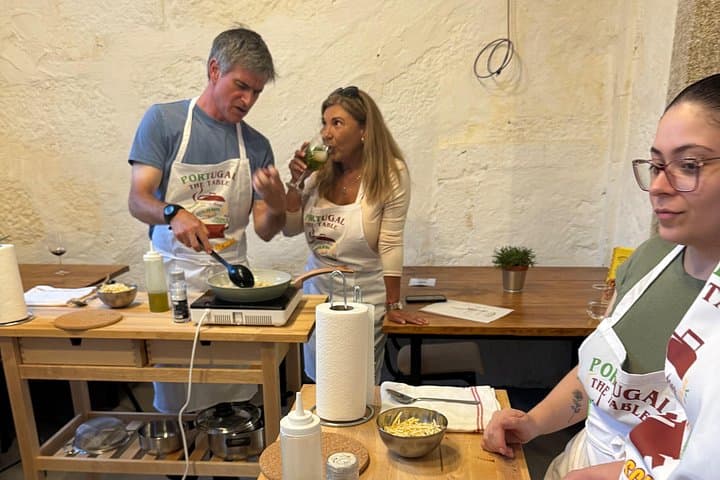
Portugal's cooking classes put you at the stove, not in a spectator seat. You'll work with pastéis de nata dough that fights back, crack open a cataplana to steam-cook seafood the Algarve way, or salt-soak bacalhau like a local. Classes run in working pastry shops, home kitchens, and farm tables in the Douro — often starting at the morning market, where you pick the fish and vegetables yourself.

Updated September 2026

Pick your way

The ways to do it — honestly compared.

Way 1

Pastéis de nata in a working pastry shop

Ninety-minute classes focused entirely on Portugal's custard tart, taught in actual bakeries where you handle laminated dough, custard ratios, and caramelization timing. You work in small batches and taste what comes out of the oven, often with port or wine. It's short, specific, and you leave knowing one thing well.

Why you'll love it

  • Short time commitment — 90 minutes start to finish
  • Real bakery setting, not a demo kitchen
  • You learn the actual technique, not a shortcut
  • Affordable entry point — $40–96 per person

Worth knowing

  • Single-dish focus — no full meal
  • Limited to Lisbon and Porto
  • Can feel rushed if you're a slow learner

Best for: Anyone who wants to nail one iconic recipe without committing half a day

Typical price: $40–96 per person

Way 2

Market-to-table with a local guide

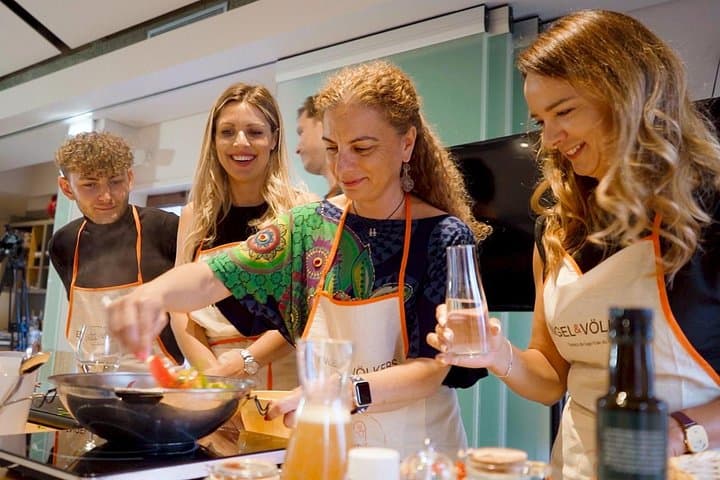
Four to five hours that start at a morning market — Bolhão in Porto, Arroios in Lisbon, or the stalls in Lagos. You shop with the instructor, then cook whatever's seasonal: bacalhau, cataplana, olive oil–based mains. The meal you make is the meal you eat, and the market context makes ingredient choices make sense.

Why you'll love it

  • You learn to shop, not just cook
  • Seasonal, ingredient-led menus
  • Includes the full meal and wine
  • Guides explain regional context and substitutions

Worth knowing

  • Long commitment — half a day minimum
  • Market access depends on timing and renovations
  • Higher price point — $173–239 per person

Best for: People who want the full procurement-to-plate experience and have the morning free

Typical price: $173–239 per person

Way 3

Cataplana-focused in the Algarve

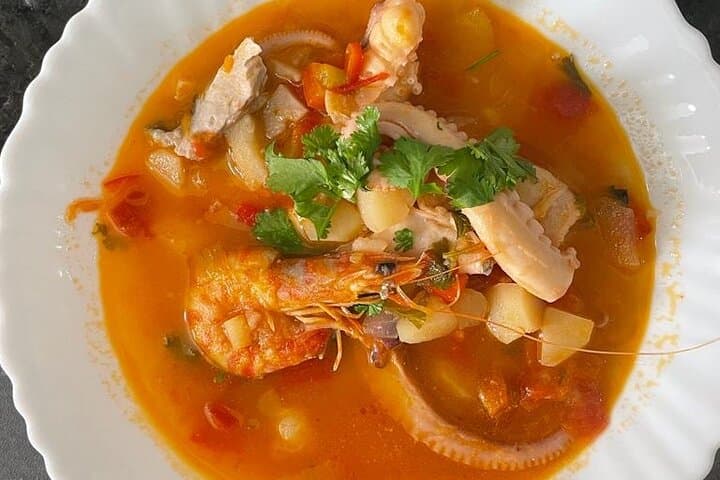
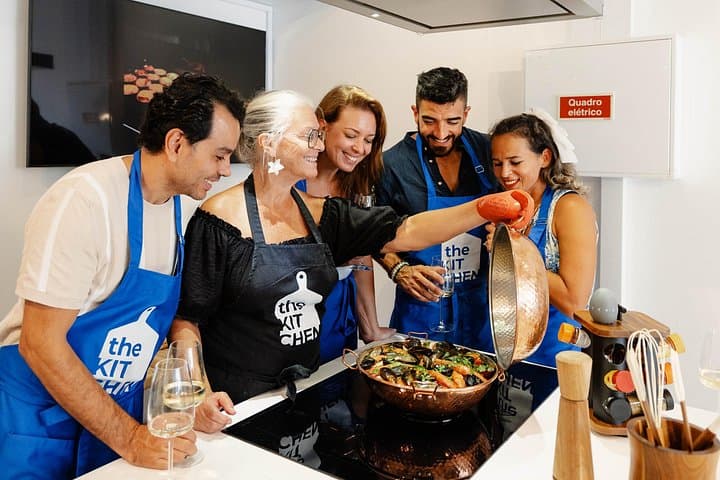
Two and a half to three hours learning the hinged copper pot technique that defines Algarve seafood cooking. You layer ingredients, seal the dome, and steam-cook fish, shellfish, and sometimes pork. Classes happen in home kitchens or small studios near Lagos, Portimão, and Faro, and the dish you make is the centerpiece of the meal.

Why you'll love it

  • Region-specific technique you won't learn elsewhere
  • Hands-on with traditional equipment
  • Includes the full meal you cooked
  • Small group or private format

Worth knowing

  • Limited to Algarve locations
  • Fewer reviews to vet quality in advance
  • Some classes require you to get to rural settings

Best for: Anyone basing in the Algarve who wants to master the region's signature cooking method

Typical price: $133–179 per person

Way 4

Farm or vineyard settings with multi-course meals

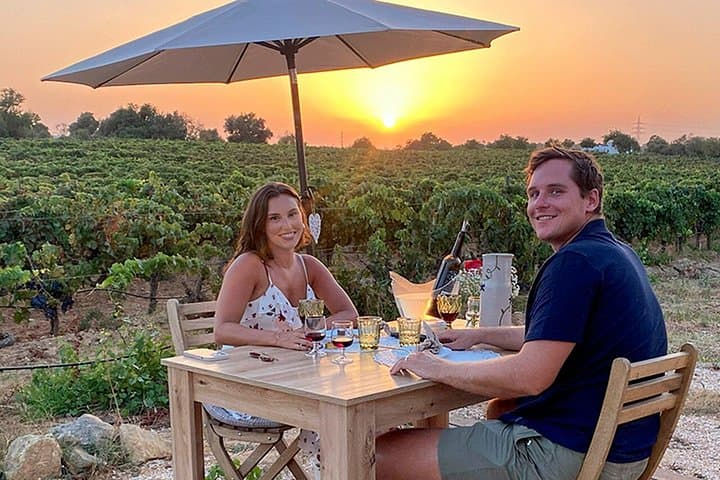
Three to four hours on working farms or vineyard properties in the Douro Valley or Algarve, where you cook with ingredients grown or pressed on-site. Classes cover traditional techniques — olive oil use, regional mains, wine pairings — and end with a sit-down meal at a table overlooking vines or fields. Some run at sunset.

Why you'll love it

  • Ingredient sourcing is part of the experience
  • Scenic settings with wine or farm tours included
  • You eat what you cook in a memorable location
  • Regional techniques tied to the landscape

Worth knowing

  • Requires transport to rural areas
  • Sunset timing may not suit your schedule
  • Higher cost for the setting — $136–231 per person

Best for: People who want the cooking to be part of a larger wine country or countryside experience

Typical price: $136–231 per person

Before you go

  • Morning market classes require early starts — 9 or 10 a.m. is common, and markets close by early afternoon.
  • Bolhão Market in Porto has been under renovation on and off; some classes swap to secondary markets when it's closed.
  • Pastéis de nata classes book up fast in Lisbon — reserve at least a week ahead in high season.
  • Cataplana pots retain heat long after cooking; instructors will warn you, but burns happen if you're not paying attention.
  • Classes that include wine or port often serve it throughout cooking, not just at the meal — pace yourself if you're cooking in the afternoon heat.
  • Private home-based classes (like Pedro's in Portimão) have fewer public reviews but often allow more flexibility on menu and timing if you ask in advance.

The operators

Who does it best.

Browse all Cooking Classes tours →